The Life Cycle PMP Framework
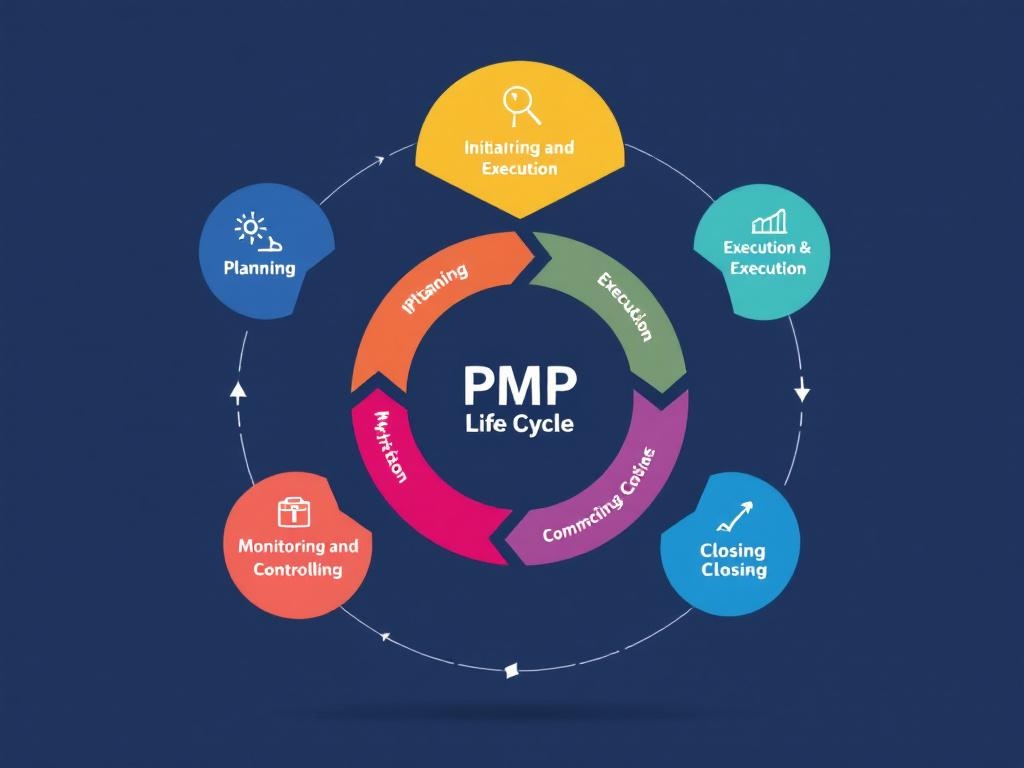
The life cycle PMP framework offers a structured approach guiding projects from start to finish, delivering a practical methodology for managing complex projects. According to the PMBOK® Seventh Edition, this framework divides into five distinct phases that transform complex work into manageable segments, allowing organizations to handle project challenges effectively.
Key Takeaways
- The life cycle PMP includes five critical phases: Initiation, Planning, Execution, Monitoring and Controlling, and Closing
- This framework accommodates various project methodologies, including predictive, iterative, agile, and hybrid approaches
- The methodology aligns with 10 PMBOK® knowledge areas, ensuring comprehensive project management
- Proper implementation of the life cycle PMP can prevent scope creep and enhance project success rates
- The approach enables effective risk mitigation, resource allocation, and performance tracking throughout the project journey
Each phase serves a specific purpose in your project’s development. The project lifecycle begins with Initiation, where you define core objectives and secure stakeholder approval. Planning follows with detailed roadmaps and resource allocations. During Execution, your team implements the planned activities while you monitor progress.
Concurrent Monitoring and Controlling ensures you track performance against established metrics, making adjustments as needed. The final Closing phase involves formal acceptance of deliverables and documentation of lessons learned for future projects.
This systematic approach helps you maintain control throughout your project’s duration. You’ll find that adopting this framework reduces uncertainty and increases your ability to deliver value consistently. Project managers who master the PMP methodology typically achieve better outcomes with fewer complications.
You can adapt the life cycle framework to fit various project types and industries. Whether you’re working in construction, IT development, or organizational change, the fundamental structure provides a reliable foundation for successful project delivery.
“The life cycle PMP framework transforms complex projects into manageable phases, empowering organizations to navigate challenges with clarity and precision. By aligning with diverse methodologies and the PMBOK® knowledge areas, it not only enhances project success rates but also safeguards against scope creep through strategic planning and execution.”
The Project Management Life Cycle: A Strategic Framework
The life cycle PMP framework provides a structured approach that guides projects from conception to completion. According to the PMBOK® Seventh Edition, it’s defined as “the series of phases that a project passes through from its start to its completion.” This framework consists of five distinct phases: Initiation, Planning, Execution, Monitoring and Controlling, and Closing.
You’ll find that these phases can function sequentially, iteratively, or overlap depending on your organization’s specific needs. The life cycle PMP approach accommodates various project methodologies including predictive (waterfall), iterative, agile, and hybrid cycles. While the Sixth Edition of PMBOK® specifies five process groups that align with these phases, the Seventh Edition emphasizes progressive elaboration where estimates become increasingly precise as your project advances.
Strategic Value of the Project Life Cycle
The life cycle PMP framework delivers substantial strategic value by breaking complex work into manageable phases. This approach helps you maintain project focus, satisfy stakeholders, and achieve objectives efficiently. When you implement the life cycle PMP methodology, you align your project with the 10 PMBOK® knowledge areas (Integration, Scope, Time, Cost, Quality, Resource, Communications, Risk, Procurement, and Stakeholder).
This structured approach prevents scope creep through clearly defined deliverables and control points. It also enables effective risk mitigation, resource allocation, and performance tracking using tools like earned value analysis. The initiation phase serves as a 90% success factor, while planning charts the course for project execution. As the saying goes, “If you fail to plan, you plan to fail.”
Phase 1 of the life cycle PMP methodology focuses on setting the foundation by authorizing, funding, and defining the project at the organizational level. During this phase, you’ll identify business needs, objectives, stakeholders, and high-level scope. Key deliverables include the project charter, business case, and statement of work.
Phase 2 involves creating a comprehensive roadmap through detailed planning. This critical phase develops a complete project integration management plan that requires sponsor approval before execution begins. The life cycle PMP approach ensures you have proper controls in place throughout the entire project journey, increasing your chances of successful delivery.
Expert Insight: To maximize the effectiveness of your projects, diligently follow the Project Management Life Cycle, which divides complex tasks into manageable phases: Initiation, Planning, Execution, Monitoring and Controlling, and Closing. Ensure thorough planning to create a comprehensive roadmap and secure stakeholder buy-in, as this sets the stage for your project’s success and reduces the risk of scope creep. Lastly, continuously monitor and adapt your project processes to align with the PMBOK® knowledge areas, fostering efficient resource allocation and effective risk mitigation throughout the project journey.
Strategic Value of the Project Life Cycle
The life cycle PMP framework provides a structured approach that guides your projects from initial concept through to successful completion. According to the PMBOK® Seventh Edition, the project life cycle is “the series of phases that a project passes through from its start to its completion.” This strategic framework breaks complex work into five manageable phases: Initiation, Planning, Execution, Monitoring and Controlling, and Closing.
You’ll find the life cycle PMP approach delivers significant benefits to your project management practice. By implementing this framework, you can effectively execute your projects while preventing scope creep through clearly defined deliverables and control points. The life cycle PMP methodology enables efficient risk mitigation, optimal resource allocation, and performance tracking via tools like earned value analysis.
The framework aligns with all ten PMBOK® knowledge areas, including Integration, Scope, Time, Cost, Quality, Resource, Communications, Risk, Procurement, and Stakeholder management. Organizations report that 80% of project work increasingly follows this format, demonstrating its widespread acceptance and effectiveness.
Leveraging Life Cycle PMP for Project Success
Each phase of the life cycle PMP framework offers unique strategic advantages:
- Initiation phase provides a solid foundation by defining the business need, objectives, and high-level scope
- Planning phase creates a comprehensive roadmap with detailed schedules and resource requirements
- Execution phase implements the plan while managing team performance
- Monitoring and Controlling phase tracks progress and implements corrective actions
- Closing phase ensures proper handover and captures lessons learned
The life cycle PMP approach can be adapted to different project delivery frameworks, whether you use predictive (waterfall), iterative, agile, or hybrid approaches. This flexibility allows you to tailor the life cycle PMP methodology to your specific organizational needs.
The initiation phase is particularly critical, serving as a 90% success factor for your projects. During this phase, you’ll develop key deliverables like the project charter, business case, and statement of work. By thoroughly addressing the life cycle PMP requirements at this early stage, you’ll set your project up for success.
As you progress through the life cycle PMP phases, your project estimates become more precise through progressive elaboration. This ensures you can make increasingly accurate predictions about project outcomes, which is essential for maintaining stakeholder satisfaction and achieving your strategic objectives.

Phase 1: Initiation – Setting the Foundation
The life cycle PMP framework begins with the crucial initiation phase, where you establish the groundwork for your entire project. According to the PMBOK® Seventh Edition, the project life cycle represents “the series of phases that a project passes through from its start to its completion.” The initiation phase authorizes your project at the organizational level, securing funding and defining its parameters.
During this foundation-setting stage, you’ll identify the business need driving your project, establish clear objectives, recognize key stakeholders, and outline the high-level scope. This phase typically produces three essential deliverables: the project charter, business case, and statement of work. You’ll also determine which development approach best suits your project—whether predictive (waterfall), agile, or hybrid.
Key Steps in the Initiation Phase
To successfully navigate the initiation phase of your life cycle PMP journey, follow these critical steps:
- Identify the problem or business need driving the project
- Define the preliminary scope boundaries
- Identify and analyze all project stakeholders
- Develop a comprehensive project charter
While this is typically the shortest phase in the project life cycle PMP framework, it’s often the most vital for securing project approval and ensuring organizational alignment. Consider that projects with properly executed initiation phases have a 90% higher success rate than those that rush through this foundational work.
For example, when implementing a new payroll system, the initiation phase would begin with a thorough feasibility study and robust business justification. This phase sets the tone for everything that follows in your project integration management process.
By taking time to properly structure your project during initiation, you’ll prevent many common project management mistakes that derail initiatives later. The life cycle PMP approach provides clear checkpoints throughout each phase, helping you manage stakeholder expectations and maintain focus on strategic objectives through defined deliverables and control points.

Phase 2: Planning – Creating the Roadmap
The planning phase forms the backbone of your project’s life cycle PMP approach. During this critical stage, you’ll develop a comprehensive project management plan that requires sponsor approval before execution can begin. Planning typically consumes 30-40% of your project’s total time investment, but this upfront work dramatically increases your chances of success.
Your planning efforts should create detailed documentation covering all knowledge areas within the life cycle PMP framework. This includes developing a work breakdown structure (WBS) that decomposes deliverables into manageable work packages. You’ll also establish baseline metrics for scope, schedule, and budget to measure performance against actual results throughout the project.
The planning phase requires you to identify and analyze potential risks that might impact your project’s life cycle PMP implementation. Creating a risk management plan helps you establish response strategies for both threats and opportunities. Consider developing risk response strategies that address high-priority risks proactively.
Key Components of Your Project Management Plan
Your project management plan should include these essential elements to guide your life cycle PMP approach:
- Scope statement and WBS defining all deliverables
- Schedule with activities, dependencies, and critical path
- Budget with cost estimates and funding requirements
- Quality standards and control methods
- Resource assignments and management strategy
- Communications plan detailing information flow
- Risk register and response plans
- Procurement strategy for external resources
- Stakeholder engagement approach
Remember that effective project collaboration depends on clear documentation of roles and responsibilities during planning. Use tools like RACI matrices to clarify who’s accountable for each component of your life cycle PMP implementation.
The planning phase also establishes how you’ll track and control project performance. You’ll need to define key performance indicators, reporting mechanisms, and change management procedures to maintain control throughout the life cycle PMP process. These governance structures help prevent scope creep and ensure you can adapt to changing conditions without losing focus on your project objectives.
Expert Insight: During the planning phase of your project, invest the time to create a robust project management plan, as this serves as the foundation for successful execution. Focus on detailed documentation, including a work breakdown structure and risk management strategies, to ensure you effectively manage scope, schedule, and budget throughout the project lifecycle. Remember, clear communication, defined roles, and governance structures are vital for tracking progress and addressing changes proactively, ultimately enhancing your project’s success.