Project Responsibility Matrix Template: A Guide to RACI Roles and Use
A project responsibility matrix template serves as an essential organizational tool that maps stakeholders to specific tasks and deliverables across projects. This structured approach clarifies roles and accountability, helping teams avoid task duplication, fill responsibility gaps, and establish clear ownership for every project component.
Key Takeaways:
- The RACI matrix defines four critical roles: Responsible, Accountable, Consulted, and Informed, which help organizations clarify task ownership and communication pathways.
- Every project task requires at least one Responsible person and exactly one Accountable person to ensure clear accountability.
- The matrix is typically structured with tasks as rows and stakeholders as columns, using R, A, C, and I designations to show each person’s relationship to tasks.
- Over 85% of Fortune 500 companies utilize this framework to establish clear project responsibilities and prevent potential workflow issues.
- The project responsibility matrix template can be adapted to different organizational needs through variations like RASCI, DACI, and RAPID models.
Understanding RACI Fundamentals
The RACI model offers a straightforward yet powerful responsibility assignment framework that defines four distinct roles for each project task:
- Responsible (R): The person who performs the work to complete the task. Multiple people can be responsible for a single task.
- Accountable (A): The person who makes final decisions and holds ultimate ownership. Only one person should be accountable for each task.
- Consulted (C): Those whose input or expertise is needed before decisions or actions occur.
- Informed (I): People who need updates on progress or decisions but don’t provide direct input.
Creating Your RACI Matrix
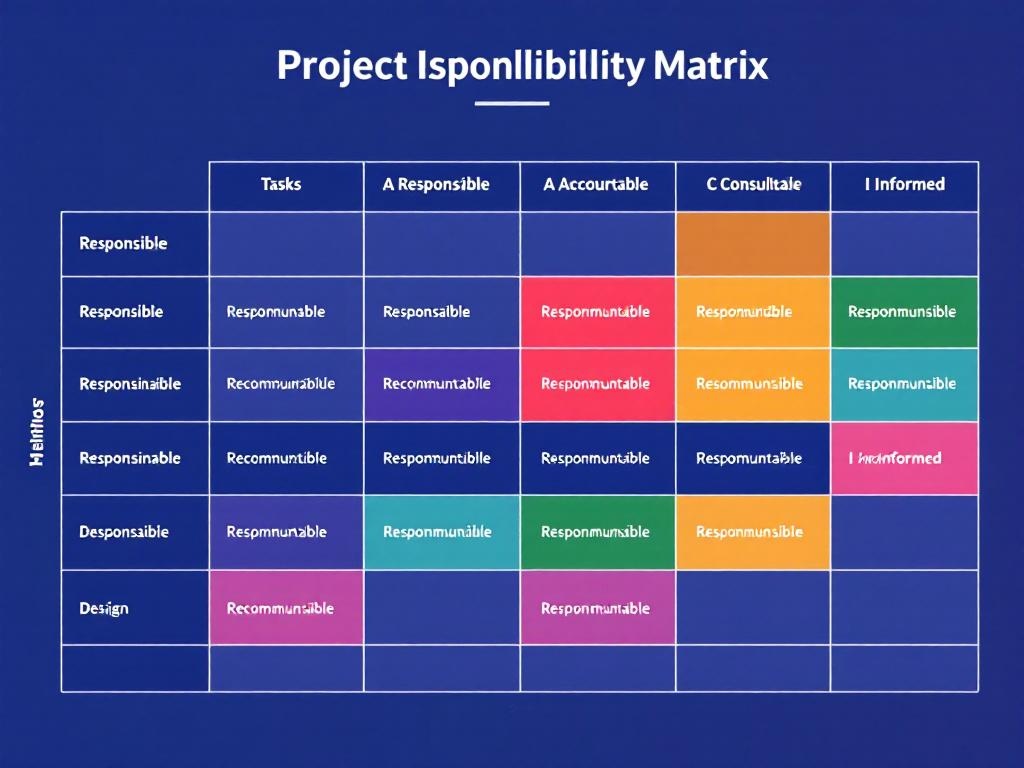
Building an effective responsibility matrix starts with proper setup. List all project tasks or deliverables along the left side as rows. Place stakeholder names or roles across the top as column headers. For each task-stakeholder intersection, assign the appropriate R, A, C, or I designation.
A well-designed matrix ensures that:
- Each task has at least one R (responsible party).
- Each task has exactly one A (accountable party).
- C and I designations are used selectively to avoid communication overload.
Common Implementation Challenges
When implementing a RACI matrix, you might face several obstacles:
- Role confusion between Responsible and Accountable positions.
- Matrix overcomplication with too many C and I designations.
- Resistance from team members unaccustomed to defined responsibilities.
- Difficulty updating the matrix as project scope changes.
To overcome these challenges, keep your matrix simple, provide clear role definitions, and update regularly during project reviews.
RACI Variations for Specific Needs
Several adaptations of the basic RACI model exist to address specific organizational requirements:
- RASCI: Adds “Support” role for those providing resources or assistance.
- DACI: Uses “Driver” instead of “Responsible” and adds “Approver” for final sign-off.
- RAPID: Focuses on decision-making with Recommend, Agree, Perform, Input, Decide roles.
Choose the variation that best fits your team’s decision-making structure and communication needs.
Implementation Best Practices
For maximum effectiveness, follow these implementation guidelines:
- Create the matrix early in project planning.
- Review with all stakeholders to confirm understanding and agreement.
- Make the matrix accessible to everyone involved.
- Schedule regular reviews to keep it current.
- Use it during meetings to clarify action items and decisions.
- Train new team members on how to interpret and use it.
The right matrix becomes a living document that guides project execution, resolves conflicts, and strengthens accountability across the organization.
“Embrace the power of the RACI matrix to transform chaos into clarity, as it maps stakeholders to their roles with precision, ensuring every task has a dedicated champion. By defining responsibility and accountability, this essential tool not only prevents workflow issues but also fosters collaboration, making it a cornerstone of successful project management in today’s complex environments.”
Understanding Project Responsibility Matrix (RACI Matrix)
A project responsibility matrix template helps you clarify who’s doing what across your initiatives. This powerful tool maps stakeholders to specific tasks and deliverables, preventing confusion about roles. Also known as a Responsibility Assignment Matrix (RAM) or linear responsibility chart, the RACI matrix is utilized by over 85% of Fortune 500 companies to establish clear accountability.
The RACI framework is particularly valuable when working on complex projects with multiple departments or stakeholders. You’ll find it eliminates common project issues like task duplication, missed deliverables, and accountability gaps.
Breaking Down RACI Roles
The RACI project responsibility matrix template uses four distinct roles:
- Responsible (R): These team members handle the hands-on execution of tasks. For example, developers building a specific feature.
- Accountable (A): Only one person can be accountable per task. This individual owns final approval and ensures quality and timeliness. Without clear accountability, projects risk failure.
- Consulted (C): These stakeholders provide two-way expertise and input before decisions are made, such as architects during planning stages.
- Informed (I): These people receive one-way progress updates but don’t directly contribute to task completion.
For your project responsibility matrix template to work effectively, every task needs at least one Responsible person and exactly one Accountable person. Even team members with minimal involvement should be designated as Informed.
When creating your project responsibility matrix template, format it with tasks as rows and stakeholders as columns. The cells contain R, A, C, or I designations. This visual layout makes it easy to see who’s doing what at a glance and helps prevent overloading specific team members with too many responsibilities.
Consider using variations like RASCI, which adds a Supporting (S) role for junior team members assisting the Responsible person. This added dimension can help you develop stronger project leadership by creating clear pathways for mentorship.
Remember, the project responsibility matrix template differs from standard project plans. While project plans focus on scope, timeline, and deliverables, your RACI matrix concentrates specifically on roles and tasks, creating the accountability framework your project needs for success.

RACI Roles Explained
Understanding each role in your project responsibility matrix template is essential for successful project leadership. The RACI framework clarifies who does what, preventing confusion and ensuring accountability across your team.
The RACI matrix defines four distinct roles that help organize project responsibility:
- Responsible (R): These team members perform the actual work. They handle the hands-on execution and implementation of tasks. For example, developers building a feature are responsible for coding it. You’ll typically have multiple responsible parties across different tasks in your project responsibility matrix template.
- Accountable (A): This is the decision-maker who approves completed work and holds ultimate ownership. You should assign only one accountable person per task to prevent diluted ownership. The accountable person ensures quality and timeliness while providing final sign-off. Without clear accountability, your project risks failure.
- Consulted (C): These stakeholders provide input before decisions are made. They offer two-way expertise and specialized knowledge that shapes the work. For example, architects consulted on planning provide valuable technical insights. Your project responsibility matrix template should include these subject matter experts where needed.
Completing the RACI Framework
- Informed (I): These individuals receive one-way progress updates but aren’t directly involved in the work. Executives, stakeholders, and adjacent teams typically fall into this category. Keeping them informed helps maintain alignment across your organization and stakeholder satisfaction.
When creating your project responsibility matrix template, remember that every task needs at least one Responsible person and exactly one Accountable person. Everyone involved should have a role, even if they’re just Informed. This comprehensive assignment prevents tasks from falling through the cracks.
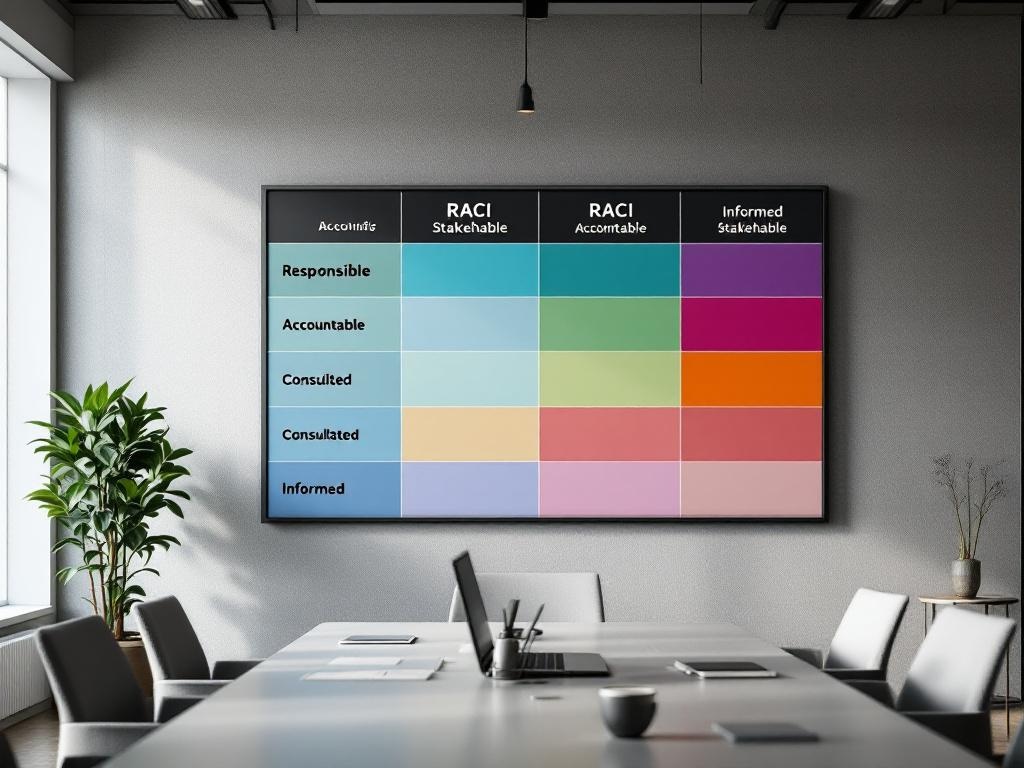
The project responsibility matrix template serves as a powerful visualization tool, typically with tasks as rows and stakeholders as columns. The cells contain R, A, C, or I designations that clarify each person’s relationship to each task. This simple format makes responsibilities immediately clear to everyone involved.
RACI Matrix Examples and Templates
A project responsibility matrix template helps you establish clear roles and accountabilities for every team member. The RACI matrix serves as a crucial project communication tool that can prevent confusion, reduce bottlenecks, and improve overall project efficiency.
When developing your project responsibility matrix template, you’ll need to include key components that make it effective. The matrix should display tasks as rows and team members or roles as columns, with RACI designations filling the cells. You can create your template in Excel, Word, or specialized project management software depending on your team’s preferences.
Typical RACI Matrix Structure
| Task/Deliverable | Team Member 1 | Team Member 2 | Team Member 3 | Team Member 4 |
|---|---|---|---|---|
| Task 1 | R | A | C | I |
| Task 2 | C | R | A | I |
| Task 3 | I | C | R | A |
For software development projects, your project responsibility matrix template might include tasks like requirements gathering, system design, coding, testing, and deployment. For example, the Product Owner might be Accountable (A) for requirements, developers Responsible (R) for coding, architects Consulted (C), and executives Informed (I).
Construction projects benefit significantly from a well-designed project responsibility matrix template. You’ll typically assign the project manager as Accountable (A) for planning phases, with contractors as Responsible (R), architects and engineers as Consulted (C), and stakeholders as Informed (I).
Steps to Create an Effective RACI Model
- Identify all project tasks and deliverables
- List all stakeholders and team members involved
- Assign RACI designations to each cell
- Review to ensure each task has exactly one Accountable person
- Check for balance in responsibilities to prevent overloading team members
Your project responsibility matrix template should be a living document that you revisit throughout the project lifecycle. As scope changes or team members transition, update your matrix accordingly to maintain clarity around roles and responsibilities.
When creating your project responsibility matrix template, remember that simplicity is key. Only include tasks that truly need role clarification, and keep stakeholder groups at a manageable level to prevent the matrix from becoming unwieldy.
Expert Insight: When creating a RACI matrix template, prioritize clarity by clearly defining tasks and limiting the number of stakeholders involved; this prevents confusion and keeps the matrix manageable. Regularly update the document to reflect changes in project scope or team dynamics, ensuring that everyone remains aligned on roles and responsibilities. Remember, a well-structured RACI matrix not only improves communication but also enhances project efficiency by minimizing bottlenecks and clarifying accountability.
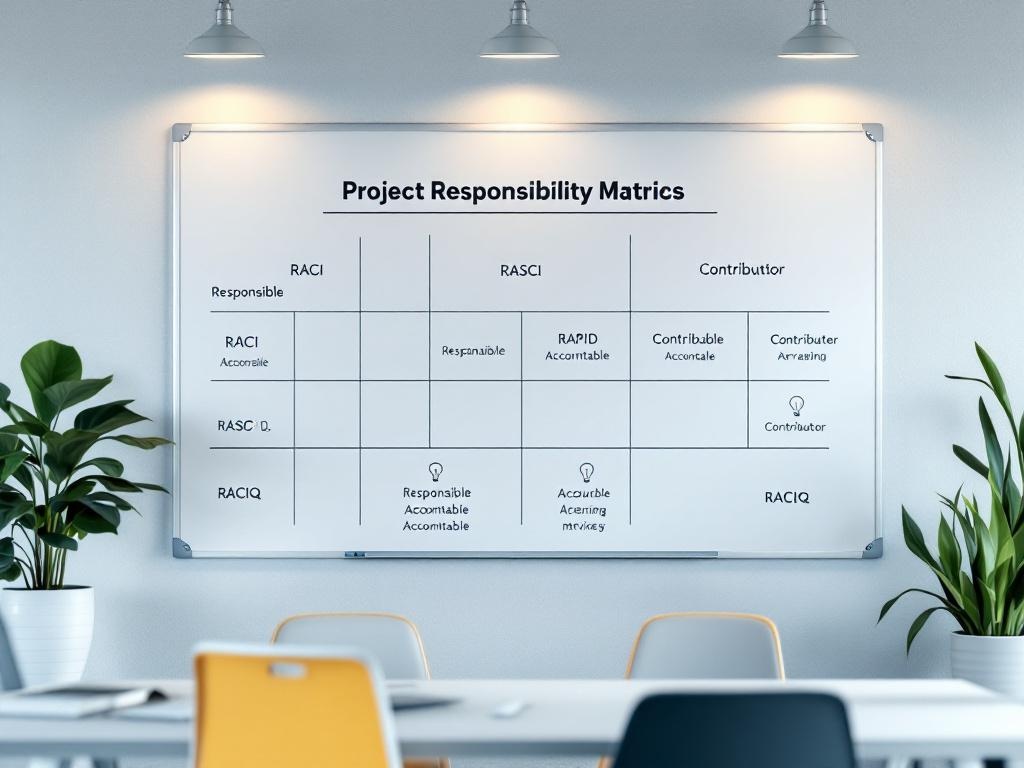
RACI Variations for Different Business Needs
While the traditional project responsibility matrix template uses the RACI format, you might need different variations to match your specific project requirements. Each RACI alternative offers unique advantages depending on your organization’s structure and project complexity.
The RASCI matrix expands on the standard RACI by adding a “Supporting” role. This addition is particularly valuable when you have junior team members or cross-functional contributors who assist the Responsible person without having complete ownership. For example, a senior developer might be Responsible for coding a feature while junior developers play a Supporting role by handling specific components under supervision. This RACI model variation creates clearer documentation of mentoring relationships.
The DACI framework introduces a “Driver” role that focuses specifically on ensuring progress:
- Driver: Pushes the project forward and removes obstacles
- Approver: Makes final decisions (similar to Accountable)
- Contributors: Provide input (similar to Consulted)
- Informed: Receive updates on progress
For organizations facing complex decision-making processes, the RAPID framework might be more suitable:
| Role | Purpose | Example |
|---|---|---|
| Recommend | Proposes action | Business analyst suggesting solution |
| Agree | Must agree before implementation | Legal team approving terms |
| Perform | Executes the decision | Development team building feature |
| Input | Provides expertise | Subject matter experts |
| Decide | Makes final decision | Project sponsor |
When managing project communication in large enterprises, consider the RACIQ model, which adds a “Quality review” role specifically tasked with verifying outputs meet requirements. This works particularly well for regulated industries where compliance verification is mandatory.
For smaller teams with simpler projects, the streamlined RAC model (Responsible, Accountable, Consulted) removes the Informed category entirely, focusing only on active participants. This project responsibility matrix template variation reduces complexity while maintaining essential role clarity.
Remember that whichever project responsibility matrix template you choose, the goal remains consistent: clearly defining who does what to prevent confusion, duplication of effort, and accountability gaps during project collaboration.