Understanding Stakeholder Mapping
A stakeholder map is a strategic visualization tool that documents and analyzes the relationships, influence, and impact of all parties involved in a project. Creating a comprehensive stakeholder map allows you to develop targeted engagement strategies, identify key relationships, and prioritize communication efforts across internal and external stakeholders.
Key Takeaways
- A stakeholder map helps organizations improve project outcomes by up to 20-30% through structured engagement approaches.
- Effective stakeholder mapping involves systematic identification using multiple methods like brainstorming, focus groups, and expert consultations.
- Categorization techniques such as the Power/Interest Grid and Salience Model help prioritize stakeholder interactions.
- Stakeholders should be analyzed across multiple dimensions including power, interest, influence, and urgency.
- Regular updating and reassessment of the stakeholder map is crucial as project dynamics and stakeholder positions evolve.
Stakeholder mapping isn’t just a procedural exercise—it’s a critical project management practice that can significantly impact your success. The process helps you identify who needs what information and when they need it, preventing communication gaps that often derail projects.
Creating an Effective Stakeholder Map
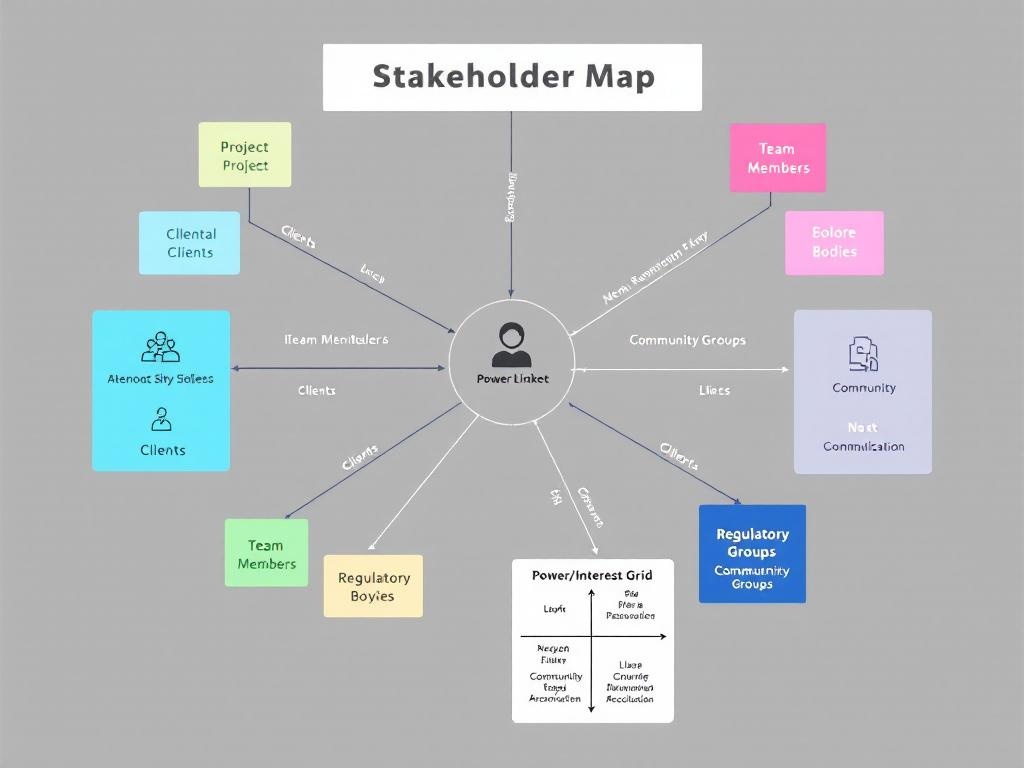
Creating an effective map requires thoroughness. Start by gathering diverse perspectives through team sessions, one-on-one interviews, and document reviews. Include both obvious stakeholders (clients, team members) and less apparent ones (regulatory bodies, community groups).
Categorizing Stakeholders
After identification, categorize each stakeholder based on their attributes. The Power/Interest Grid places stakeholders in quadrants based on their decision-making authority and level of concern about project outcomes. This visual framework helps determine appropriate engagement levels for each group.
Analyzing Stakeholder Influence
Analyze stakeholders across multiple dimensions. Consider questions like:
- How much influence do they wield?
- What motivates their interest?
- What specific concerns might they have?
- How urgently do their needs require attention?
Document relationships between stakeholders to identify potential alliances or conflicts. This network analysis often reveals indirect influence paths that might otherwise remain hidden.
Updating the Stakeholder Map
The stakeholder landscape changes throughout a project’s lifecycle. Set regular intervals to review and update your map. New stakeholders may emerge, while others’ positions and interests shift with project developments. Proactive management of these changes prevents surprises that could derail progress.
“By meticulously mapping stakeholders, organizations unlock the power of strategic engagement, enhancing project outcomes by 20-30%. This dynamic visualization reveals key relationships and priorities, ensuring that every voice is heard and every influence is strategically leveraged.”
Understanding Stakeholder Mapping: A Strategic Visualization Tool
Stakeholder map explained simply: it’s a visual technique that helps you analyze relationships and influence of all parties involved in your projects. This strategic tool allows you to document key information about stakeholders while providing a clear picture of their interest levels and potential impact on your project outcomes. When you create a visual representation, you’ll quickly identify trends, compare positions, and group stakeholders by shared attributes.
Organizations using structured stakeholder mapping create more effective engagement strategies and achieve 20-30% improved outcomes. You’ll find this tool essential for project success criteria by enabling better engagement plans and risk management approaches.
The Five-Step Stakeholder Identification Process
Begin your stakeholder map explained through systematic identification using project documentation, organizational charts, and previous records. You should consider both internal stakeholders (employees, managers) and external ones (customers, suppliers, regulators, communities). The stakeholder map explained becomes more comprehensive when you use multiple identification methods:
- Brainstorming sessions with your team
- Focus groups with representative stakeholders
- Consultations with subject matter experts
- Research into similar projects and their stakeholders
- Review of historical data and past grievance logs
When identifying stakeholders, ask these key questions: Who is affected by this initiative? Who supports or opposes it? Internal identification methods typically yield 40% more stakeholders than external scans alone. After completing this process, you’ll need to categorize them using proven techniques.
For effective stakeholder engagement approaches, place identified stakeholders on a Power/Interest Grid. High power/high interest stakeholders require close management while those with low power/low interest need minimal monitoring. The Salience Model analyzes power, legitimacy, and urgency to form eight stakeholder types, helping you develop targeted communications.
Your stakeholder map explained fully should include prioritization strategies for effective resource allocation. Focus on stakeholders with high influence, power, interest, impact, and urgency. Using quadrant systems means high power/high interest stakeholders receive 70% more engagement time. Consider directions of influence: upward (senior management), downward (team), outward (suppliers), and sideward (peers).
The Five-Step Stakeholder Identification Process
Creating an effective stakeholder map explained starts with proper identification of all parties who can influence or be affected by your project. You’ll need to follow a systematic approach to ensure no important stakeholders are missed.
The first step involves reviewing existing project documentation, organizational charts, and historical records. Companies that combine both internal and external identification methods typically discover 40% more stakeholders than those using external scans alone. This comprehensive approach ensures you identify stakeholders thoroughly before beginning any engagement efforts.
Next, categorize stakeholders as either internal (employees, department heads, executives) or external (customers, suppliers, regulators, communities). This distinction helps tailor your engagement strategies appropriately.
For the third step, employ diverse methods to identify all possible stakeholders:
- Brainstorming sessions with your team
- Focus groups with project participants
- Consultations with subject matter experts
- Research into regulatory requirements
- Review of historical project data
- Analysis of grievance logs
The fourth step requires asking critical questions to uncover hidden stakeholders:
- Who will be directly or indirectly affected by this initiative?
- Who controls resources necessary for success?
- Who supports or opposes the project objectives?
- Who has specialized knowledge relevant to project outcomes?
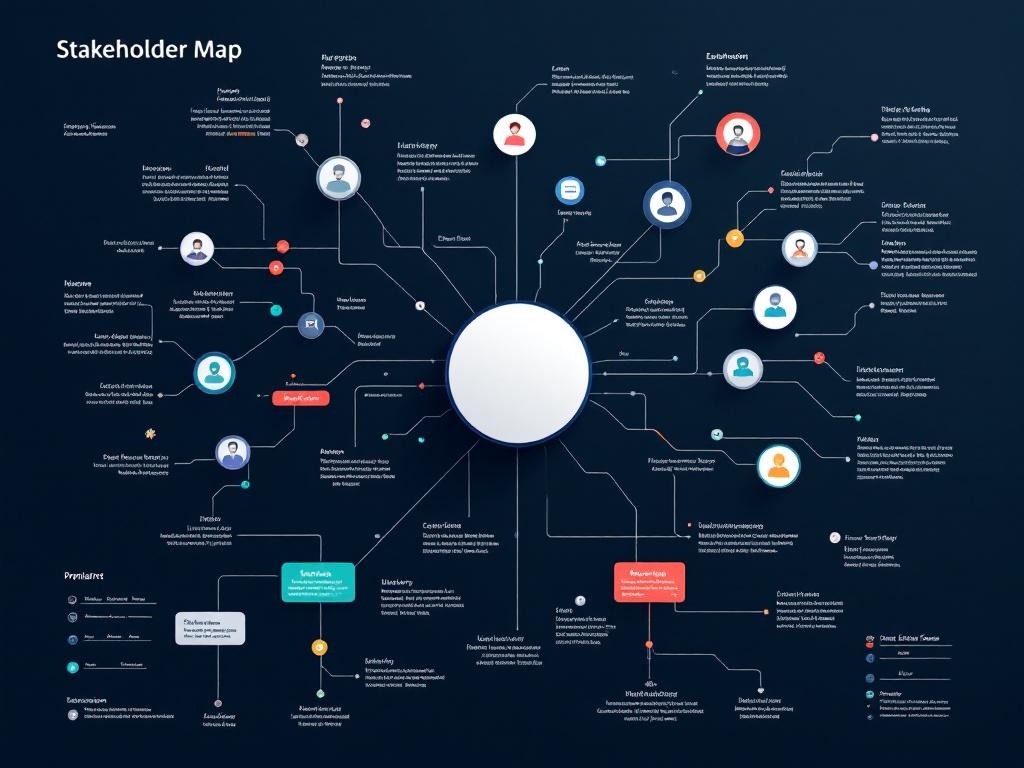
Finally, document your findings in a structured stakeholder map explained clearly for all team members. This visual representation becomes the foundation for developing your stakeholder engagement approach and prioritizing your communication efforts.
Using Visualization Tools Effectively
Your stakeholder map explained visually helps identify trends, compare positions, and group stakeholders by shared attributes. Organizations using structured stakeholder map explained methodologies create more effective engagement strategies and achieve 20-30% improved outcomes compared to those without formal mapping processes.
The most effective stakeholder maps include not just names and roles but also influence levels, interests, potential impacts, and relationship dynamics. When developing your stakeholder map explained documentation, remember that the goal isn’t just identification but creating a strategic tool that guides your entire engagement approach.
Expert Insight: To effectively navigate the Five-Step Stakeholder Identification Process, start by thoroughly reviewing existing project documentation and engaging diverse internal and external identification methods, as this can reveal up to 40% more stakeholders. Once identified, categorize stakeholders into internal and external groups to fine-tune your engagement strategies, while also asking critical questions to surface hidden stakeholders. Finally, document your findings in a structured stakeholder map that not only lists names and roles but also analyzes their influence, interests, and relationship dynamics to drive a successful engagement approach.
Powerful Categorization Techniques and Models
Categorizing stakeholders effectively is crucial for your project success. A well-structured stakeholder map explained properly can transform how you engage with key project participants. Using the right categorization models helps you allocate resources efficiently and develop targeted communication strategies.
The Power/Interest Grid divides stakeholders into four quadrants based on their level of power and interest in your project. Those with high power and high interest require close management and frequent engagement. You’ll need to keep high power/low interest stakeholders satisfied while monitoring low power/high interest individuals. Stakeholder engagement approaches differ significantly based on where participants fall in this grid.
The Salience Model adds more depth to your stakeholder map explained through three dimensions: power, legitimacy, and urgency. This creates eight distinct stakeholder types ranging from dormant (power only) to definitive (all three attributes). Research shows organizations using this model experience 25% more effective stakeholder alignment.
For complex projects, consider the Influence/Impact Matrix. This tool helps you tailor engagement strategies by analyzing a stakeholder’s influence over project decisions against the impact your project has on them. Stakeholders with high influence and high impact receive prioritized attention in your communication plan.
Advanced Mapping Approaches
Multi-dimensional stakeholder maps incorporate additional factors beyond the standard models. Your maps can include interest, impact, influence, criticality, position, and required effort to engage. This comprehensive approach ensures no stakeholder map explained misses critical relationship elements.
Geographical mapping creates four distinct zones based on proximity and impact. Zone 1 represents stakeholders experiencing major daily impacts from your project, while Zone 4 includes those minimally affected. This model is particularly valuable for identifying project stakeholders in infrastructure or community-based initiatives.
The stakeholder map explained through these techniques provides concrete data for developing your engagement plan. Categorize systematically, update regularly, and use the insights to guide your stakeholder communication strategy. Remember that stakeholder positions shift throughout your project lifecycle, requiring periodic reassessment of your maps.
Organizations using advanced stakeholder engagement techniques report a 25% improvement in project outcomes, highlighting the importance of effective categorization in achieving alignment.
hbr.org
Prioritization Strategies for Effective Resource Allocation
Your stakeholder map isn’t just a visual diagram—it’s a strategic tool that demands thoughtful prioritization to allocate your limited resources effectively. A well-executed stakeholder map explained through proper prioritization creates 20-30% improved project outcomes.
Start by focusing on stakeholders with high influence, power, interest, impact, and urgency. Your most valuable stakeholders typically sit in the high power/high interest quadrant and should receive approximately 70% more engagement time than others. These key players can significantly impact project success criteria and require close management.
Implement a tiered prioritization system using a 1-3 scale based on engagement metrics:
- Tier 1: Critical stakeholders requiring frequent, personalized communication
- Tier 2: Important stakeholders needing regular updates and occasional meetings
- Tier 3: Peripheral stakeholders who receive standardized communications
Consider the directions of influence when prioritizing stakeholder relationships:
- Upward: Senior management and executives
- Downward: Team members and direct reports
- Outward: Suppliers, customers, and external partners
- Sideward: Peers and colleagues in other departments
Track stakeholder movement across your stakeholder map explained through quarterly reviews. This dynamic approach ensures you can adjust your stakeholder engagement approach as positions and priorities shift over time.
Resource Allocation Framework
Develop a concrete resource allocation framework based on your stakeholder map explained through specific time and effort commitments:
| Stakeholder Category | Communication Frequency | Meeting Type | Resource Allocation |
|---|---|---|---|
| High Power/Interest | Weekly | One-on-one | 50-60% |
| High Power/Low Interest | Biweekly | Small group | 15-20% |
| Low Power/High Interest | Monthly | Larger forums | 15-20% |
| Low Power/Low Interest | Quarterly | Mass communications | 5-10% |
This framework ensures you’re applying the stakeholder map explained through strategic decision-making about where to invest your time and resources. Remember that your stakeholder prioritization should evolve as your project progresses through different phases, with certain stakeholders becoming more critical at specific milestones.