The Framework of Project Management
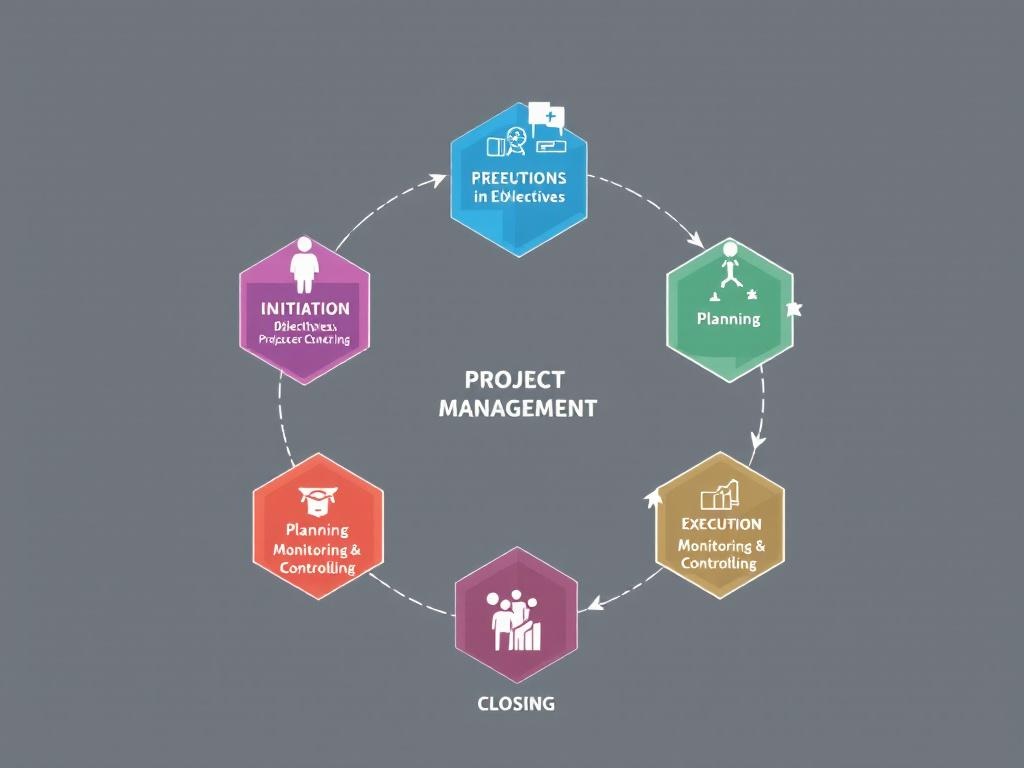
The framework of project management consists of five essential phases: Initiation, Planning, Execution, Monitoring and Controlling, and Closing. Each phase plays a specific role in creating project success. Through these connected stages—starting with setting objectives during initiation and implementing tracking systems—you can transform your vision into real results while reducing risks and making the best use of your resources.
Key Takeaways
- Project success hinges on a structured approach that integrates systematic planning, clear communication, and adaptive management across all project phases.
- Proper initiation establishes project scope, goals, and stakeholder expectations, serving as a critical foundation for subsequent project activities.
- Comprehensive planning involves creating detailed work breakdown structures, risk management plans, and establishing performance baselines.
- Execution requires effective resource allocation, team coordination, and maintaining alignment with project objectives.
- Continuous monitoring and controlling enables proactive identification of potential issues and timely corrective actions.
Evolution of Project Management Principles
Project management principles have evolved significantly over time, as shown in PMI’s historical analysis of project management. The structured approach helps organizations deliver consistent results across different types of projects.
The Importance of Effective Leadership
Effective project leadership requires balancing technical skills with people management. Research indicates that projects managed with formal methodologies are 63% more likely to succeed than those without defined frameworks.
Adapting Project Phases
Your ability to adapt these phases to specific project requirements will determine your ultimate success. Many organizations now incorporate agile methodologies into traditional project management frameworks to increase flexibility and responsiveness to changing conditions.
“Successful project management is a structured journey through interconnected phases that transform strategic vision into reality, ensuring that every objective is met with precision and adaptability. By establishing a solid foundation in initiation and maintaining vigilant oversight throughout, organizations can navigate complexities, mitigate risks, and optimize resources to achieve their goals.”
Initiation: Setting the Foundation for Success
The initiation phase establishes the foundation for all phases of project management success. During this crucial first step, you’ll develop a Project Charter that outlines the business case, scope boundaries, SMART goals, and key stakeholders. This document serves as your project’s constitution, providing authorization and direction for everything that follows.
You’ll need to conduct thorough feasibility studies and financial analyses including ROI calculations, NPV assessments, and payback period evaluations to justify investment. A project scope baseline helps prevent future scope creep by clearly defining boundaries early.
Risk assessments during initiation identify potential obstacles before they become problems. By aligning funding requirements with organizational strategy, you ensure your project supports broader business objectives. The Project Initiation Document (PID) formalizes this alignment and establishes clear vision, responsibilities, and governance structures.
Traditional vs. Agile Approaches
Your approach to initiation varies based on methodology. Traditional project management emphasizes comprehensive documentation and detailed planning before proceeding. Agile frameworks focus on faster charter development with the understanding that requirements may evolve. Both approaches recognize that all phases of project management benefit from proper initiation.
Consider this example: An employee onboarding revamp project might set a target of 85% positive feedback from new hires. The initiation phase would establish this metric alongside resource requirements and stakeholder expectations.
Projects waste $122 million per $1 billion invested due to poor performance according to PMI’s PMBOK Guide. Proper initiation dramatically improves these outcomes by ensuring stakeholder engagement from the start. High-performing projects (77%) leverage supporting project management software beginning in this phase to track documentation and approvals.
By investing time in initiation, you’ll create clarity around project purpose, establish realistic expectations, and secure buy-in from key decision-makers. This foundation supports all subsequent phases of project management and significantly increases your chances of delivering successful outcomes.
Expert Insight: **Professional Tip:** Prioritize thorough planning during the initiation phase by developing a well-defined Project Charter that includes SMART goals, stakeholder engagement, and a clear project scope baseline to prevent future scope creep. Conduct feasibility studies and risk assessments to align funding with organizational objectives, ensuring your project is strategically positioned from the start. By investing time in initiation, you lay a solid foundation that enhances communication, establishes clarity, and significantly increases your chances of project success.
Planning: Creating the Comprehensive Roadmap
The planning phase forms the crucial backbone of all phases of project management, typically consuming up to 50% of your project timeline. During this stage, you’ll develop a comprehensive Project Management Plan (PMP) that serves as your roadmap to success.
Begin by creating a Work Breakdown Structure (WBS) that divides all deliverables into manageable tasks. This structured decomposition helps you visualize the entire project scope and identify dependencies between elements. Your WBS becomes the foundation for establishing realistic timelines with clear milestones that mark significant achievements.
Establishing baselines for scope, schedule, and cost is essential for measuring performance throughout all phases of project management. These reference points allow you to detect deviations early and take corrective action before small issues become major problems.
Developing Comprehensive Sub-Plans
Your planning phase must include several critical sub-plans:
- Risk Management Plan: Identify potential risks, analyze their impact, and develop effective risk response strategies.
- Communication Plan: Define how information will flow among stakeholders.
- Resource Allocation Plan: Determine what human and material resources you’ll need and when.
- Quality Management Plan: Establish standards and review processes.
- Procurement Plan: Outline what will be purchased externally and how.
Meaningful stakeholder involvement during planning is crucial. By seeking approval and commitment from key decision-makers, you’ll prevent scope creep and ensure all phases of project management proceed smoothly. This collaborative approach also helps identify potential conflicts or constraints early.
Budget estimation requires detailed cost breakdowns across all phases of project management. Include both direct costs (labor, materials) and indirect costs (overhead, contingency reserves). Using techniques like three-point estimating can increase accuracy by considering optimistic, most likely, and pessimistic scenarios.
Remember that planning isn’t static. Your plan should remain flexible enough to accommodate changes while maintaining focus on project objectives. By investing time in thorough planning, you’ll create a solid foundation for all subsequent phases of project management.
Expert Insight: **Professional Tip: Comprehensive Project Roadmap Planning**
Invest significant time in the planning phase, as it sets the foundation for your entire project; aim to allocate up to 50% of your project timeline to this crucial stage. Create a Work Breakdown Structure (WBS) to clearly visualize project scope and establish baselines for scope, schedule, and cost, enabling proactive risk management and performance tracking. Foster meaningful stakeholder involvement to build commitment and avoid complications, ensuring your project remains focused and adaptable to changes throughout its lifecycle.
Execution: Bringing Plans to Life
The execution phase transforms your carefully crafted plans into tangible results. This critical stage in all phases of project management accounts for approximately 30-40% of your project’s lifecycle. You’ll find this phase particularly challenging as it tests your ability to coordinate resources while maintaining focus on deliverables.
Begin with a powerful kick-off meeting to officially launch the project. This gathering aligns team members with project objectives and establishes clear expectations. During this meeting, you should review the project charter, confirm roles, and address any preliminary questions. A well-executed kick-off meeting can boost project momentum by 25% according to experienced project professionals.
Implementing a RACI matrix helps clarify who’s Responsible, Accountable, Consulted, and Informed for each task. This responsibility assignment framework minimizes confusion and ensures appropriate stakeholder involvement throughout all phases of project management. Your team will appreciate knowing exactly what’s expected of them.
Resource assignment becomes your priority as execution begins. Match team members to tasks based on their skills and availability. Consider implementing capacity planning techniques to prevent overallocation of resources, a common execution phase pitfall.
Status updates should flow according to your communication plan. Regular reports keep stakeholders informed while highlighting progress against baselines. These updates should be concise, focused on exceptions, and include all phases of project management metrics that matter.
Managing Workflow and Relationships
Establishing efficient workflows helps coordinate activities across functional teams. You’ll need to break down silos and facilitate collaboration, especially in complex projects. Consider using collaborative project techniques to enhance team performance during execution.
Procurement management becomes vital when working with external vendors. Your ability to manage these relationships affects both quality and timeline adherence. Create clear vendor performance metrics and maintain open communication channels to address issues promptly.
The execution phase overlaps significantly with monitoring and controlling activities. You’ll make real-time adjustments based on performance data, ensuring the project stays aligned with objectives. This adaptive approach characterizes successful execution across all phases of project management.
Expert Insight: To bring your project plans to life effectively, start with a powerful kick-off meeting that aligns your team with objectives and clarifies roles—this can boost your project’s momentum by 25%. Utilize a RACI matrix to clearly define responsibilities, which reduces confusion and fosters accountability among your stakeholders. Finally, maintain open communication with regular status updates and adapt to performance data to ensure your project stays on track, effectively bridging the execution phase with monitoring and controlling activities.
Monitoring and Controlling: Keeping Projects on Track
Keeping your project on track requires vigilant monitoring and controlling throughout all phases of project management. This crucial phase runs parallel to execution, ensuring your project stays within defined parameters while adapting to inevitable changes.
The monitoring and controlling phase involves continuous tracking of project performance against established baselines. You’ll need to implement systematic approaches to measure progress, identify variances, and take corrective action when necessary. Projects that neglect this phase risk significant cost overruns and schedule delays that can derail even the most promising initiatives.
Essential Monitoring and Control Tools
Effective project managers employ several key tools during this phase:
- Earned Value Analysis (EVA) – Calculate performance metrics using the formula EV = % complete × BAC (Budget At Completion) to objectively assess progress
- Key Performance Indicators (KPIs) – Track specific metrics tied to project objectives
- Status Reports – Document progress, issues, and upcoming work regularly
- Change Control Boards – Review and approve/reject modification requests
- Risk Registers – Monitor identified risks and implement response strategies
- Quality Control Measures – Ensure deliverables meet specified requirements
According to the PMBOK Guide framework, implementing these tools can significantly reduce the $122 million wasted per $1 billion invested due to poor performance.
When you keep your projects on target through rigorous monitoring, you’re better positioned to identify issues before they become critical. This proactive approach allows for timely implementation of risk response strategies that minimize negative impacts.
The following table illustrates the key components of an effective monitoring and controlling system:
| Component | Purpose | Example |
|---|---|---|
| Performance Measurement | Compare actual vs. planned | Schedule variance analysis |
| Change Control | Manage scope modifications | Change request evaluation process |
| Risk Monitoring | Track potential threats | Weekly risk review meetings |
| Quality Control | Verify deliverable standards | Testing and inspection protocols |
| Status Reporting | Communicate progress | Weekly dashboards with all phases of project management metrics |
Implementing comprehensive project issue management processes ensures problems are identified, documented, analyzed, addressed, and resolved systematically. This structured approach prevents issues from falling through the cracks during all phases of project management.
Remember that successful monitoring isn’t just about collecting data—it’s about converting that information into actionable insights that drive project success through all phases of project management.
Organizations that emphasize effective project monitoring and control experience 20-25% less project failure rates.
forbes.com