A Simple Project Plan Sample
A simple project plan sample provides a structured roadmap essential for defining scope, objectives, timeline, roles, budget, risks, and success metrics. By implementing a comprehensive project plan, businesses can significantly improve their project success rates, with organizations using formal project management practices being 2.5 times more likely to achieve their goals.
Key Takeaways:
- A well-designed project plan includes critical components like executive summary, SMART objectives, scope statement, timeline, RACI chart, and budget summary.
- Formal project management practices can save teams nearly 5,000 hours annually and prevent wasting 10% of project budgets.
- Include 3-5 key performance indicators (KPIs) that track both leading and lagging project metrics.
- Develop clear, measurable objectives using the SMART framework to ensure project alignment.
- Implement a communication plan to keep stakeholders informed and maintain project transparency.
Effective project planning creates the foundation for success. Your team will benefit from having a clear direction, understanding their responsibilities, and knowing exactly what defines success. Research shows that projects with detailed plans experience 37% fewer failures and complete tasks on time more consistently.
The Core Elements of a Successful Project Plan
The core elements of a successful project plan include scope definition, resource allocation, risk assessment, and timeline development. Each component plays a crucial role in guiding your team through complex initiatives while maintaining focus on deliverables.
Start by crafting precise objectives that specify what you’ll accomplish, how you’ll measure success, and when you’ll complete each milestone. This clarity helps prevent scope creep and keeps stakeholders aligned throughout the project lifecycle.
“Crafting a well-structured project plan is not just a blueprint; it’s the compass that guides teams towards success, aligning objectives with performance metrics and stakeholder communication. By embracing formal project management practices, organizations can unlock significant time savings and enhance their likelihood of achieving goals, ultimately transforming project outcomes.”
The Power of Simple Project Plans in Business
A simple project plan sample provides the structured roadmap you need to define scope, objectives, timeline, roles, budget, risks, and success metrics. Projects are 2.5 times more successful when you implement formal project management practices. The right PM software helps your average employee save 498 hours annually—for a team of 10, that’s nearly 5,000 hours saved each year.
Without proper planning, you’ll waste nearly 10% of every dollar due to poor project performance. While 82% of companies use work and project management software, only 52% consistently create scoping documents, leaving critical gaps in project execution.
Essential Components of an Effective Project Plan
Your simple project plan sample should include these key elements:
- Executive Summary: Create a concise purpose statement with high-level objectives (e.g., “Redesign fitness studio website with AI for personalized matching, reducing booking time by 30%”)
- SMART Objectives: Define specific, measurable, achievable, relevant, and time-bound goals with clear KPIs
- Scope Statement: Establish clear boundaries with 3-6 bullet points for what’s in and out of scope to prevent scope creep
- Timeline & Milestones: Document 6-8 major project milestones with dates and owners (only 48% of organizations consistently baseline their schedules)
- RACI Chart: Clarify who is Responsible, Accountable, Consulted, and Informed for each deliverable
- Budget & Resource Summary: Outline overall costs with a 5-15% contingency based on risk level
This table summarizes the key metrics you should track in your simple project plan:
| Metric Type | Examples | Measurement Method |
|---|---|---|
| Schedule | % milestones met on time | Variance analysis |
| Budget | % over/under planned costs | Actual vs. baseline |
| Quality | Defect rates, customer satisfaction | Testing, surveys |
| Scope | Change requests approved | Document changes |
| ROI | Financial return vs. investment | Revenue – Cost |
You’ll need to create a KPI dashboard with 3-5 key metrics that include both leading indicators (tasks completed on time) and lagging indicators (final budget variance). To calculate variance effectively, use: Variance (%) = (Actual − Baseline)/Baseline × 100.
For effective project communication, include a simple communication plan that outlines how updates will be shared. This helps set expectations and keeps stakeholders informed through regular status updates, ensuring everyone has visibility into progress against your simple project plan sample.
Organizations that implement formal project management practices are 2.5 times more successful than those that do not.
forbes.com
Essential Components of an Effective Project Plan
Creating a simple project plan sample requires attention to key elements that drive success. Your project plan forms the backbone of execution, and getting it right can save significant time and resources. Projects are 2.5 times more successful when formal project management practices are implemented, yet nearly 10% of every dollar is wasted due to poor project performance.
A well-structured project plan contains several essential components that work together to create clarity and direction. Here’s what you need to include:
- Executive Summary – Create a concise statement that captures the project’s purpose and high-level objectives. For example: “Redesign fitness studio website with AI for personalized matching, reducing booking time by 30%.”
- SMART Objectives – Define goals that are Specific, Measurable, Achievable, Relevant, and Time-bound. Each objective should connect to clear KPIs with both baseline and target values.
- Scope Statement – Clearly outline what’s included and excluded from your project using 3-6 bullet points for each category. This prevents scope creep and keeps the project focused.
- Timeline & Milestones – Identify 6-8 major project milestones with specific dates and owners. Only 48% of organizations consistently baseline their schedules, putting you ahead by doing so.
- RACI Chart – Detail who is Responsible, Accountable, Consulted, and Informed for each deliverable, creating clear accountability across the team.
- Budget & Resource Summary – Outline overall costs with a recommended 5-15% contingency based on risk level.
Sample Project Plan Structure
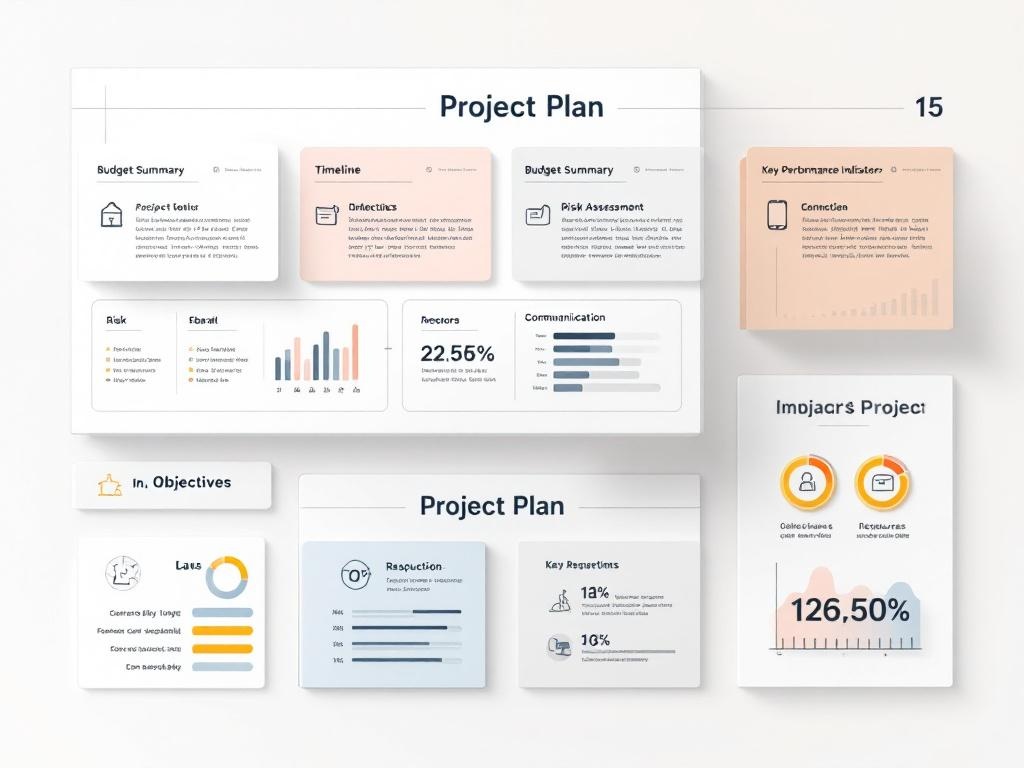
The following simple project plan sample demonstrates how these components work together:
| Component | Description | Example |
|---|---|---|
| Project Title | Clear, descriptive name | Website Redesign Project |
| Executive Summary | Brief overview | Redesign company website to improve user experience and increase conversions by 15% |
| SMART Objectives | Specific goals with metrics | Increase organic traffic by 25% within 3 months of launch |
| Scope Statement | Boundaries of work | In scope: Homepage redesign, Product pages, Checkout flow Out of scope: Blog content, Email templates |
| Timeline | Key dates | Project kickoff: Jan 15 Design approval: Feb 10 Development complete: Mar 20 Testing: Mar 21-31 Launch: Apr 5 |
| Team Roles | RACI assignments | Jane (Project Manager): Responsible for timeline Mark (Developer): Accountable for code quality |
| Budget | Cost breakdown | Design: $5,000 Development: $15,000 Testing: $3,000 Contingency (10%): $2,300 Total: $25,300 |
Using this simple project plan sample as a template, you can avoid common project management mistakes and keep your initiatives on track. When implementing your plan, remember to maintain regular communication with stakeholders and update your documentation as changes occur.
For complex projects, consider using project management software to automate tracking and reporting, which helps the average employee save 498 hours per year.
According to research by the Project Management Institute, organizations that invest in formal project management practices waste 28 times less money than those that do not.
pmi.org
Creating Clear Objectives and Success Metrics
Your project’s success hinges on well-defined objectives and metrics. A simple project plan sample must include measurable goals that align with your business priorities. Without clear targets, you’ll waste resources and potentially deliver outcomes that miss the mark.
Start by creating SMART objectives directly tied to your business KPIs. Each objective should specify what you’ll achieve, how you’ll measure success, and when you’ll complete it. For example: “Increase lead conversion by 10% in 6 months” is more effective than “improve marketing performance.”
Here’s how to structure your objectives and metrics in your simple project plan sample:
- Define 3-5 primary objectives that directly support business goals
- Include baseline measurements for each metric
- Set realistic yet challenging target values
- Specify timeframes for achievement
- Link objectives to specific deliverables
You should calculate variance using this formula: Variance (%) = (Actual − Baseline)/Baseline × 100. This helps you understand how far you’ve deviated from original targets.
Creating an Effective KPI Dashboard
Your simple project plan sample should include a KPI dashboard with both leading and lagging indicators. Leading indicators (like tasks completed on time) predict future performance, while lagging indicators (like final budget variance) measure past results.
| Metric Type | Example | Target | Measurement Frequency |
|---|---|---|---|
| Leading | Tasks completed on schedule | 95% | Weekly |
| Leading | Risk mitigation actions implemented | 100% | Bi-weekly |
| Lagging | Budget variance | ±5% | Monthly |
| Lagging | Stakeholder satisfaction | >4.5/5 | End of project |
This balanced approach ensures you’re not just looking in the rearview mirror. By mastering strategic planning with forward-looking metrics, you’ll spot potential issues before they impact your project.
Remember to document both baseline and target values for accurate progress tracking. Projects are 2.5 times more successful when you implement formal project management practices, including clear success metrics.
Your metrics should measure schedule adherence (percentage of milestones met on time), budget variance (percentage over/under), scope stability, and quality indicators. When creating project summary reports, focus on these key metrics to demonstrate progress and value to stakeholders.
Expert Insight: To ensure project success, establish clear objectives and measurable success metrics that align with your business goals. Utilize the SMART framework to define your objectives, specifying exact targets, measurement criteria, and timelines to create accountability. Regularly update and monitor a KPI dashboard that includes both leading and lagging indicators, enabling proactive adjustments and demonstrating progress to stakeholders effectively.